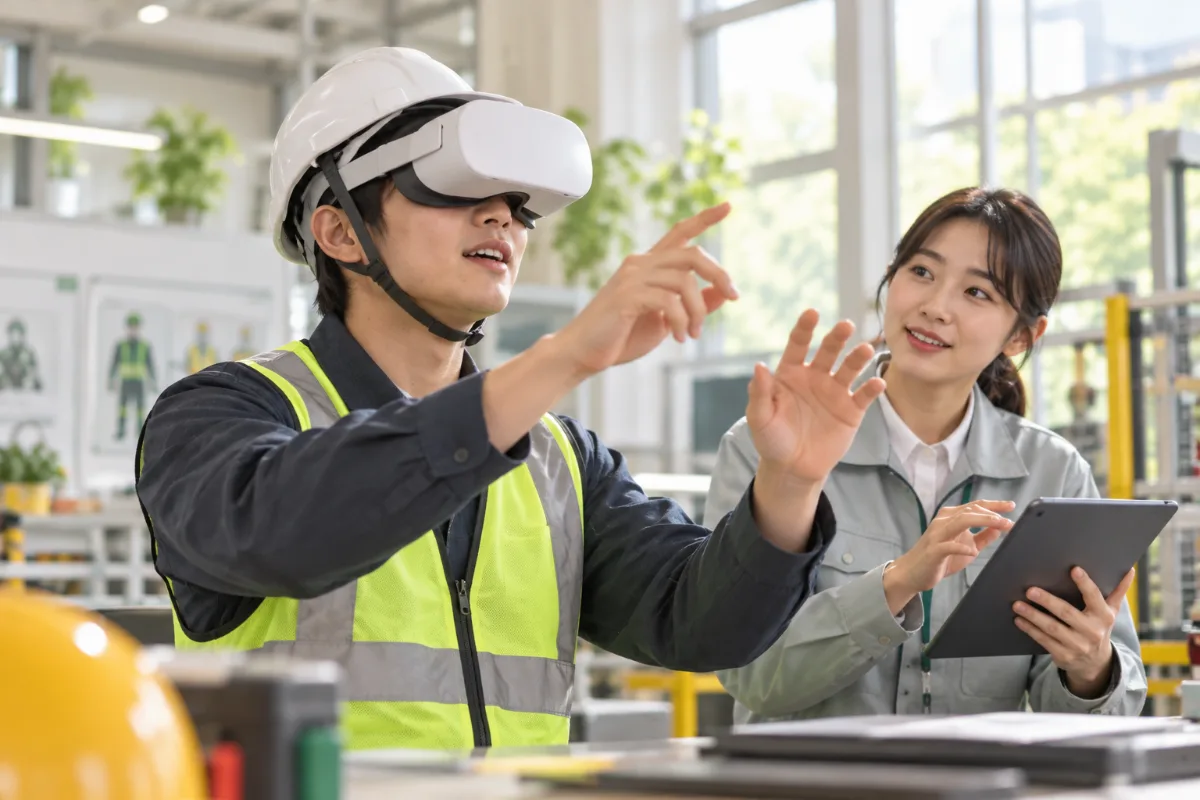

Immersive (XR) content can greatly increase learner engagement, but without preparation it easily becomes equipment that is “tried once and forgotten.” Here are five things schools and institutions considering adoption should check first.
1. Start with the learning goal
Begin not with “What can we do with XR?” but with “What should students understand in this unit?” Immersive content is most effective for places that are hard to visit, situations that are dangerous, and concepts that cannot be seen.
2. Devices and network
Preparation differs depending on whether you run on VR headsets, tablets or web browsers. Check in advance how many students will use it at once, whether the Wi-Fi is stable, and how devices will be charged and stored.
3. Space and safety
Learners cannot see their surroundings while wearing a headset. Agree on a clear open space, time limits, and what to do if someone feels dizzy, so both students and teachers feel at ease.
4. Teacher training and lesson flow
The flow of the lesson matters more than operating the device. Training where teachers experience the whole lesson — questions before, observation during, and reflection after — is the most effective.
5. How you will judge the impact
Decide before adoption what “success” looks like. Criteria such as participation, conceptual understanding and the depth of follow-up questions help you decide the next step.
During pilots, nLime reviews these five points together with schools and institutions. If you are considering adoption, feel free to reach out through Partner with us.